Oracle AI Live - Retail AI in Action
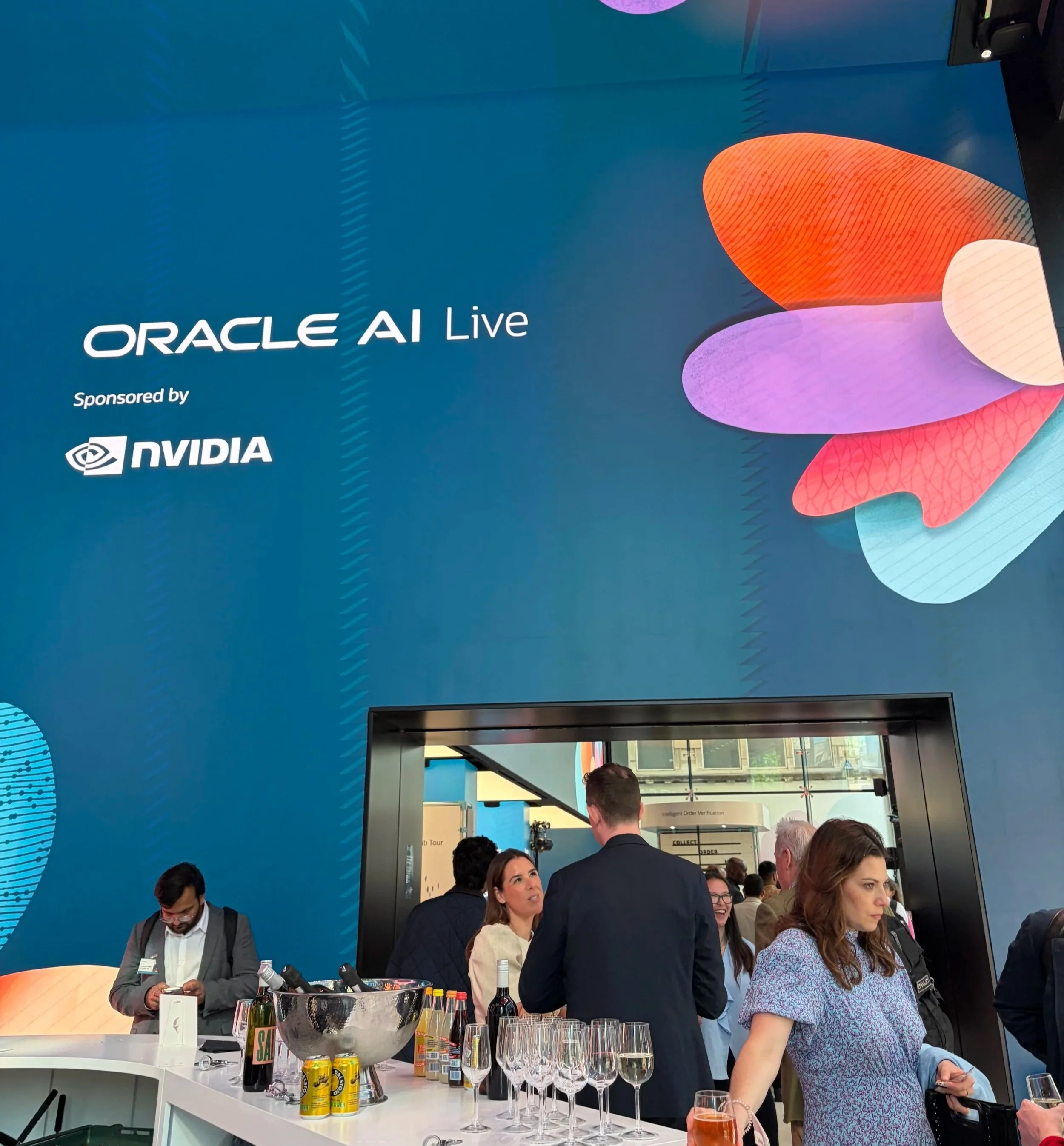
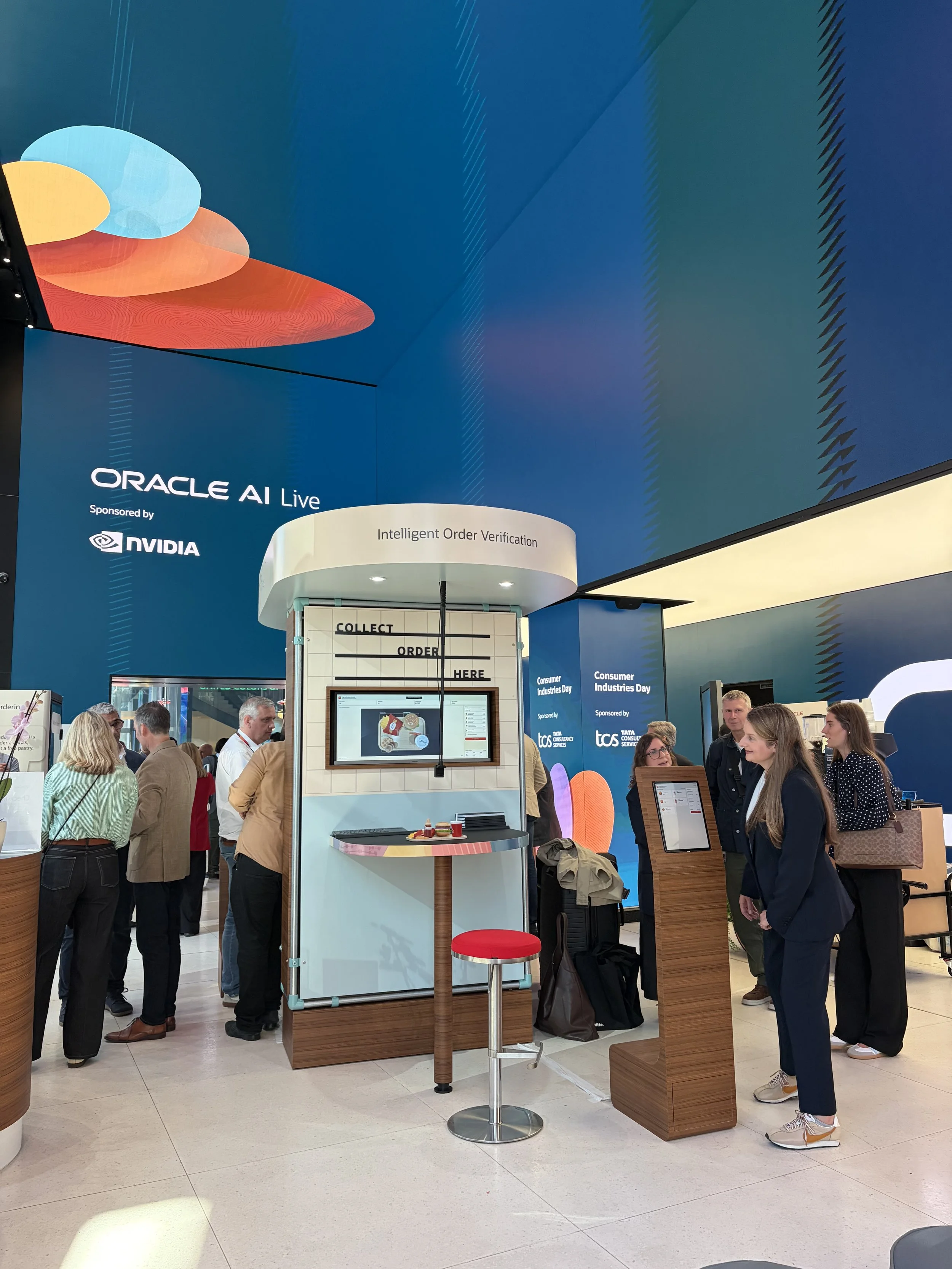
Last week, we popped into Future Stores to experience Oracle AI Live at Oxford Circus and see firsthand how quickly AI has moved from a concept retailers were exploring to something being actively deployed on the shop floor and across the supply chain.
Oracle has been embedding AI across its full retail stack for some time, but what's becoming clear is the breadth and depth of where it now sits. At the core, Oracle's retail AI and machine learning capabilities are driving decisions across assortments, offers, inventory placement, forecasting, planning, buying, and pricing. These aren't bolt-on features — they're built into the platform and designed to operate at scale across complex retail environments.
1.AI Agents That Don't Just Answer — They Act
Autonomous agents embedded across Oracle's retail suite — spanning merchandising, assortment planning, supply chain management and point of sale.
The use case it solves: Retail operations are full of repetitive, rules-based decisions that consume enormous amounts of human time. Monitoring stock levels, flagging replenishment risks, raising purchase orders, escalating exceptions — each step typically requires a person to notice, decide, and act. AI agents are designed to handle these sequences with significantly reduced human intervention — with the level of autonomy depending on how each organisation configures governance and approvals.
The benefit for retailers: Fewer operational delays, fewer missed signals, and a support team that spends its time on exceptions rather than routine tasks. For large retail estates running Oracle, this is where meaningful efficiency starts to appear — through redeployment of skilled people toward higher-value work.
2. Demand Forecasting & Inventory Optimisation
Machine learning models within Oracle Retail's planning and inventory suite, processing historical sales data, seasonal patterns and demand signals to forecast demand at SKU and location level.
The use case it solves: Retailers consistently lose margin in two places — overstocking lines that don't sell, and running out of lines that do. Manual forecasting, even when experienced buyers are involved, cannot process enough variables across enough SKUs fast enough to stay ahead of demand shifts.
The benefit for retailers: Tighter inventory, lower clearance costs, and fewer lost sales from out-of-stocks. For planning teams, AI augments the expertise by processing volumes of data at a speed and scale, surfacing insights that sharpen the decisions. For retailers with wide product ranges and multi-site operations, that combination of human judgment and AI-generated insight is where the margin impact starts to show — though as with any ML model, output quality is closely tied to the quality of the data going in.
3. AI-Powered Assortment & Space Planning
ML-based store clustering and assortment optimisation that groups stores by actual selling behaviour rather than traditional metrics like size, region, or format — a capability for which Oracle was recognised as a Leader in the 2025 IDC MarketScape for AI driven Retail Assortment Planning.
The use case it solves: Most retailers apply assortment plans based on broad store tiers, even when their customers shop very differently. A compact city-centre store with high footfall might perform more like a flagship than its square footage suggests, but a traditional cluster would never surface that.
The benefit for retailers: A product range and space allocation built around how customers actually behave in each location. Better sell-through, less dead space and a merchandising approach grounded in data.
4. AI-Assisted Experiences at the Point of Sale
Xstore gives associates real-time visibility of estate-wide inventory and customer transaction history at the point of sale. AI and generative AI capabilities are increasingly being layered on top — both by Oracle and through partner-built solutions — extending into personalised recommendations and clienteling when paired with Oracle's customer engagement layer.
The use case it solves: Associates are frequently expected to know everything about availability, alternatives, and customer preferences with limited tools to support them, which can result in missed opportunities to recommend the right product.
The benefit for retailers: Associates who can respond with more confidence, handle more queries without escalation and deliver a more personalised experience at the till — though outcomes will depend on data completeness, configuration and associate adoption.
5. Personalisation At Scale, Without Compromising Trust
AI-driven personalisation capabilities embedded across Oracle's retail applications, enabling consent-based customer experiences built on unified customer data.
The use case it solves: Retailers want to personalise — but in an environment of growing consumer awareness around data use, doing it clumsily damages trust faster than it builds loyalty. Oracle AI Live ran two dedicated sessions on this tension: one on personalisation without losing trust, and one specifically on building consent-based customer experiences that drive conversion and retention.
The benefit for retailers: The ability to deliver relevant, timely, individual experiences at scale — without the reputational risk of feeling intrusive. Oracle's framing here was deliberate: trust is positioned not as a compliance obligation but as a growth strategy. Retailers who get personalisation right, with the right data governance underneath it, build the kind of loyalty that's increasingly hard to buy through promotions alone.
Where does OLR fit in?
As an Oracle Retail system integration partner, we don't just implement the platform; we help retailers get more from it. That increasingly means embedding AI capabilities within our own delivery.
Our accelerators — including HAWK, our automated regression testing tool — are built to support faster, lower-risk deployments, which is the foundation any AI-driven retail operation needs. Across our support and managed services, we're helping clients understand where AI features are ready to activate within their existing Oracle Retail estate, and what it takes to get there.
AI in retail isn't a future roadmap item anymore. For Oracle Retail customers, it's already in the platform. The question is whether your implementation is positioned to take advantage of it.
The challenges are consistent across the industry:
Data quality — fragmented, inconsistent, or poorly structured data that AI models simply cannot work with reliably
Legacy system integration — systems that were never designed to talk to each other, let alone feed a machine learning model
Knowing where to start — too many potential use cases and not enough clarity on where AI will actually move the needle
Pilot to production — proofs of concept that work in isolation but stall when someone tries to scale them across the business
People and adoption — teams being asked to work in fundamentally different ways, without always understanding why or how
Governance and trust — growing regulatory expectations and consumer scrutiny around how data is used and how AI decisions are made
These are solvable problems — but they require the right foundations beneath the technology. The retailers best positioned to benefit from Oracle's AI investment are those who have already started addressing them.
If you are an Oracle Retail customer thinking about where AI fits into your roadmap, we'd love to have that conversation.
